Showing posts with label michigan. Show all posts

Monday, April 16, 2012

West Michigan Fruit Production Devastated by Bizarre Weather

In November 2009 I wrote a diary titled the Fragile Climate of Fruit Growing Perfection. In in I talked about West Michigan's ideal microclimate for fruit production and how fragile those perfect conditions are. Well...this year we're seeing a catastrophic collapse in West Michigan's fruit production due to weeks of record breaking high temperatures in late February to mid March combined with a winter without a prolonged hard frost.

Sure sure...everybody knows Michigan and manufacturing. Michigan and cars. Michigan and the factory, machinist thing. Yadda yadda. That's there.

But the Michigan I know is also the Michigan among the top fruit producing regions in American. Michigan, a major producer of tart cherries, blueberrries, apples, juice grapes, pears, peaches, plums, strawberries, raspberries, asparagus, the leading producer of black beans and second largest producer of dried beans. West Michigan is peppered with city and street names like Fruitport, Fruitland Township, Fruitvale road, Orchard View...

The Farmer's market overflows with an amazing variety of local, seasonal produce and my wife has a cherry jam to die for that includes no fewer than seven varieties of local cherries.

But this year, all along the West Michigan coastline, the strange weather this year has devestated the crops....


We didn't have a prolonged hard frost this winter. It was warm. Very little ice or snow....ALL. WINTER. LONG.

Blueberries:

Because of the warm winter the blueberries didn't go into a period of dormancy. That means that many areas are likely to have very unproductive blueberries this year.



But because of the record breaking March weather, many of the fruit crops bloomed early....

....too early.

And are now getting killed by hard frosts.

Juice Grapes:

Frost wipes out juice grapes in southwest Michigan
A devastating frost has wiped out grapes grown for juice in southwestern Michigan.

John Jasper, a surveyor for Welch’s Foods, tells Channel 57 that he went through hundreds of acres before even finding a live bud. He estimates more than 10,000 acres were destroyed Thursday, mostly in Berrien, Cass and Van Buren counties.

Jasper says Welch’s gets approximately 17% of its grapes from southwestern Michigan. He says the company could be forced to change recipes for some products.

"The apple crop at Kercher's Sunrise Orchards in Goshen was also heavily damaged, the owner told us Sunday."

Tart Cherries:

NW Michigan Cherry Crop Takes Hit After Record-Busting March; 50-70% Of Fruit Lost In Hard Freeze

A hard freeze has wiped out a big portion of the cherry crop in Northwest Michigan this spring. The area produces more than half the state’s cherries that end up in desserts, juice and as dried fruit.



Asparagus:

Asparagus came up early, far before the migrant workers who usually pick it start to show up. Farmers are scrambling to find locals willing to pick asparagus....but you'll notice I'm sitting here blogging instead of traveling 40 miles to the north to pick asparagus.

Strawberry farmers, apricot farmers, apple and peach farmers....everybody is getting hit.

Mark Longstroth, a fruit educator at the Michigan State University Extension, said half an hour at 28 degrees around bloom time will cause damage and half an hour at 25 degrees could take 90 percent of the crop

Fruit production is a major economic driver in West Michigan, and was one of the few stable and even growing spots during the decade long Michigan recession. This year the entire region and fruit growing industry is getting hit hard.

Michigan's fruit growers are going to need some Federal relief to make it through to the next year.

This is our food supply, folks.

Friday, March 30, 2012

Obama Admin Joins Five States to Speed Up Great Lakes Offshore Wind Farms

It's easy to look at our the massive pile of rinky dink Tea Party reps taking up space in the halls of government in places like Michigan and think nothing positive is getting done. And in many cases, that's true.

But....
The Obama administration and five states, including Michigan, have reached an agreement to speed up approval of offshore wind farms in the Great Lakes, which have been delayed by cost concerns and public opposition.

With offshore wind power in the Great Lakes this is an issue that has NOTHING to do with Today, and has EVERYTHING to do with Tomorrow. It's the responsible thing to do to get that ball rolling NOW.

Many groups, including our group (the West Michigan Jobs Group), have lobbied Michigan leaders to get back to work on the offshore wind power permitting framework....even though the best case scenario is a bunch of reps who would prefer to ignore the issue, while in the worse case scenario some reps are making moves to ban offshore wind in the Great Lakes outright.

Ain't a chummy environment for renewable energy...or.....anything, really....in Michigan these days. Not until next election, baby. Am I right? Eh? Yeah, I'm right. We're so gonna flick those sticky green bums off our fingers.

But until day our leaders work with what they've got. Say what you want about Snyder, but he knows the score with our energy needs. It's not a matter of opinion...if we stick to the status quo with our energy, we're sunk for so many reasons.

The status quo isn't an option.

So the Federal government is teaming up with Michigan, Illinois, Minnesota, and New York to speed up the regulatory process for offshore wind power in the region. That's what you call an End Run around teh stoopid. Michigan will still need to craft its own regulations...but we don't have to sit around twiddling our massive Michigan thumbs until we can get that done.


Administration officials said the region's offshore winds could generate more than 700 gigawatts — one-fifth of all potential wind energy nationwide. Each gigawatt of offshore wind could power 300,000 homes while reducing demand for electricity from coal, which emits greenhouse gases and other pollutants, according to the National Renewable Energy Laboratory in Golden, Colo.

and from an email I got

The MOU does not create any new laws¸ call for new regulations or change existing authorities. Rather, it empowers the state and federal agency signatories to coordinate and share information concerning how offshore wind proposals are reviewed and evaluated with the goal of improving coordination among all of the relevant agencies and ultimately the efficiency of such reviews.

The cooperation produced by the MOU is aimed at improving efficiencies in the review of proposed offshore wind projects by enabling simultaneous and complementary reviews, and avoiding duplicative reviews. The MOU will send a market signal to prospective developers and investors that the Great Lakes region is ready to consider offshore wind proposals and that the regulatory process will be timely and efficient.

This is an issue we need to look at through the lens of decades. As the global population climbs and third world nations much larger than the US successfully achieve a higher standard of living.

As I said earlier...this is not an issue that has anything to do with Today. this is an issue that has everything to do with Tomorrow. Even if an offshore wind farm were proposed today, it would be a decade before it's up and running.

I'm 37. I'll be nearly 60 by the time these wind farms are up. This isn't for us, or me. This is a life raft we're leaving to our kids. If they choose not to use them...or if they feel they don't need them, that will be their choice. But we can at least float that choice over to them when it's time for them to take the reins.

Tuesday, March 13, 2012

Speaking and Learning at the Holland Renewable Energy and Jobs Presentation

I was part of a renewable energy panel discussion tonight in Holland, MI. We talked about jobs and wind power. I'm the surly looking one on the far right. I talked about the importance of standing up and making noise in favor of renewable energy.


The other speakers provided some incredible information about the state of wind power manufacturing in America and the jobs created there. A person from the Holland wind turbine blade manufacturer Energetx spoke as well. He made some incredible points about striving to make their product better and cheaper. Reducing the cost of the turbines is one of the central obsessions of wind turbine parts manufacturers.

That really struck a chord with me.

In the great wind power debate I hear an awful lot of folks screaming about government subsidies and mandates and how the free market could do this so much better.....

...but what they don't seem to realize is that the free market is very much at play here. Companies like Energetx don't exist in a vacuum. They exist in a world of hard core competition. They're not just competing with other parts manufacturers...they're competing with coal.

Folks worried that the precious and almighty free market isn't able to work its magic on renewable energies need to have a conversation with a parts manufacturer and ask them if they're forced to be highly competitive, making parts better and cheaper than they can be had from China or anywhere else in the US or Europe.

The market is very much in play. And it's making these parts better and cheaper by the day, which means our wind power is getting better and cheaper by the day.

Another interesting insight brought by a fellow with the last name of VanderVeen was this: as a general rule, a wind farm almost always has some level of activity during the day. And since wind is a product of the sun heating the earth, your greatest activity for wind power comes around noon to three o'clock when the sun is reaching its peak.....which luckily happens to coincide with peak demand times.

Tuesday, February 14, 2012

Strategically Placed Comma sends Michigan's Business, Tax Climate Soaring!

Pop English quiz. Who can tell me the difference between these two headlines?

"Michigan business, tax climate soars in Tax Foundation ratings, Snyder says"

and

"Michigan business tax climate soars in Tax Foundation ratings, Snyder says"

Give up? It was the comma. The comma is what makes the Detroit Free Press headline remotely accurate. Because the Michigan Business-Tax climate did not, in fact, "soar" according to the Tax Foundation, though Rick Snyder would love for us to think so.

See, at the Tax Foundation "Business Tax Climate" means a very specific thing. It's an aggregate of five different tax climates: Corporate Income Tax, Property Tax, Sales Tax, Individual Income Tax, and Unemployment Insurance Tax. That's what the "Business Tax Climate" is. As distinct from the "Business, Tax Climate".

See?

Here's the lead paragraph in the Detroit Free Press article:

The huge changes in Michigan’s tax structure during 2011 has prompted the Tax Foundation to move the state from 49th in terms of tax climate to 7th.

Funny story...that's not what the official Tax Foundation report actually says. In fact, Michigan's OVERALL business tax climate is listed at 18th for 2012...DOWN from 17th in 2011. And our Corporate Tax structure is still at 49th for 2012.

"That's weird" I thought. Would our Governor just LIE about something like this?

So I called the Tax Foundation. Those Tax Foundation dudes were REALLY nice and freely gave me their time and patiently explained to me what was going on.

Here's what's going on:

The numbers that Rick Snyder is touting are what are called "hypothetical" numbers. That's the exact word the gentleman from the Tax Foundation used: "Hypothetical". I'll get to that in a minute. First an explanation of the changes.

Basically the official number posted on the website (18th overall in Business Tax Climate and 49th in Corporate Tax Climate) were made before Snyder's tax policy took effect. So they decided to see what Michigan might have been ranked IF the current tax policies were in fact accounted for.

So, if we could freeze dry the entire world and go back in time and change ONLY Michigan's numbers, what would they be?

In this case, Michigan's CORPORATE tax climate would have gone from 49th to 7th in the nation. CORPORATE tax climate. But Michigan's overall BUSINESS tax climate would have gone up from 18th to 12th in the nation. A rise! But far from "soaring". And a rise from an already above average number.

Okay...so why did the Tax Foundation fellow call the revised numbers "Hypothetical" numbers? Two reasons.

ONE: Because the special report assumes that Michigan changed but everybody else stayed still. But that didn't happen. We really don't know where we stand relative to other states. We can only guess.

and more importantly

TWO: The revised report does NOT include changes to the Personal Income Tax which INCREASED for 51% of Michiganders as child tax credits and low income home interest tax credits are removed and pensions are now taxed. Our personal income tax situation is getting worse here in Michigan, not better. That's bound to be a drag on the overall Business Tax Climate.

it should be noted that Michigan's reform also included some changes to the personal income tax, most of which do not come on line until 2013. These changes are not included in the estimate above.

What Snyder would like to have us believe is that we've dramatically improved our Business Tax Climate. We haven't. Our tax climate was above average at 18th in the nation before Snyder's tax policies took effect. Even if we apply the new changes without the increase in personal income tax, the rosiest picture is us moving up from above average to slightly more above average.

But even that "rosy" scenario is a distant estimate that doesn't hold up under scrutiny. All he's done is give more tax breaks to the mega-corps. GREAT news if you're a mega corp. For the rest of us, not so much. But we knew that already.

Saturday, February 4, 2012

February Fourth and FORTY TWO FREAKIN DEGREES - No snow for Snowfest

Well...here it is. February. Time for Snow Fest. It's 42 degrees outside. No snow. So people will just have to make do with beer.

My freakin' cabbages from last year that never fully grew...they're still doing fine. The brussel sprouts that never produced any brussel sprouts...they're still doing fine. Maybe they'll produce brussel sprouts this year. I'm confident they'll make it through the "winter" and have another go at it.

It's just weird, is what it is.

And here's a side note about that reduction of heating assistance from LIHEAP this year: A couple years ago when I was furious about a reduction of heating assistance being reported in Huffington Post I called the National LIHEAP office in DC to find out what the hell was going on and a kindly old lady called me back from DC and said LIHEAP / Department of Energy had gotten a huge amount from the stimulus, so funding it was bound to go down by comparison. Then she said, generally the amount of LIHEAP funding is figured using weather predictions and gas prices. A backup surplus is allocated in case the weather is colder than predicted.

This year, it seems to be the case that a warm winter was a relatively safe bet. And not just in Michigan. In Iowa City has been in the 60s this winter, it's not even below freezing right nos. Florida has been warmer, so says my family. Somebody I know in New Jersy says her tulip bulbs have started to sprout early.

Normally about this time I'm bundled up and shoveling the driveway daily, throwing salt on the driveway and looking nervously at my pile of wood as it dwindles faster than I think it should. Today I seem to be able to heat my house by throwing open a couple curtains on the south western side of the house.

Friday, February 3, 2012

Endless Stream of Frustration and Reinvention

A lot of history has been blown up over the past half century as post industrial towns have struggled to "reinvent" themselves. There's a miserable lack of historical buildings, still standing, in many post industrial towns...Ford's original factories are gone or dissolving, nearly forgotten. Cuz it's progress to un-be what we've been. A reinvention to undo what we've done and start fresh. The dynamite,detonated at the base of our architecturally sinful past wipes the slate clean again...building after building after building. All to re-invent.

One specific building in Muskegon comes to mind, and to this very day it evokes feelings of anger and resentment at its destruction when its name or image comes up. The Occidental Hotel. the Occidental Hotel in Muskegon was a landmark. It was demolished in just one of a string of many attempts to revitalize the down town over the past 50 years.

Many folks still around, including my father, tried desperately to save it. Tried desperately to keep our ties to the past. But the efforts were no use. Muskegon had to reinvent itself to stay afloat. That old phrase we hear so often when confronted with a failure of industry of manufacturing of our own economy. We need to reinvent ourselves. Once again. Again and again and again.

We had to blow the old building up.

We had to get with the times. And the times, at the time, was some ill fated mall that would itself be demolished 25 years later in a new effort in a long running meme known post-industrial reinvention. The mall would eventually itself be bulldozed to the ground. Where the Occidental Hotel once stood. Where the Mall then stood. Then a sand pit. And then a cullinary arts college surrounded by sand pit.

They did the same to the court house and countless other buildings.

One building, however, did manage to miss the wrecking ball all these years.

The "Century Club"


It's been a lot of things over the years, since its construction in 1889: a social club...a social club...also a social club...then it was a furniture store and then it became what it is today: a small mall for local artisans and, if I may say so, a place to get some amazing baklava.

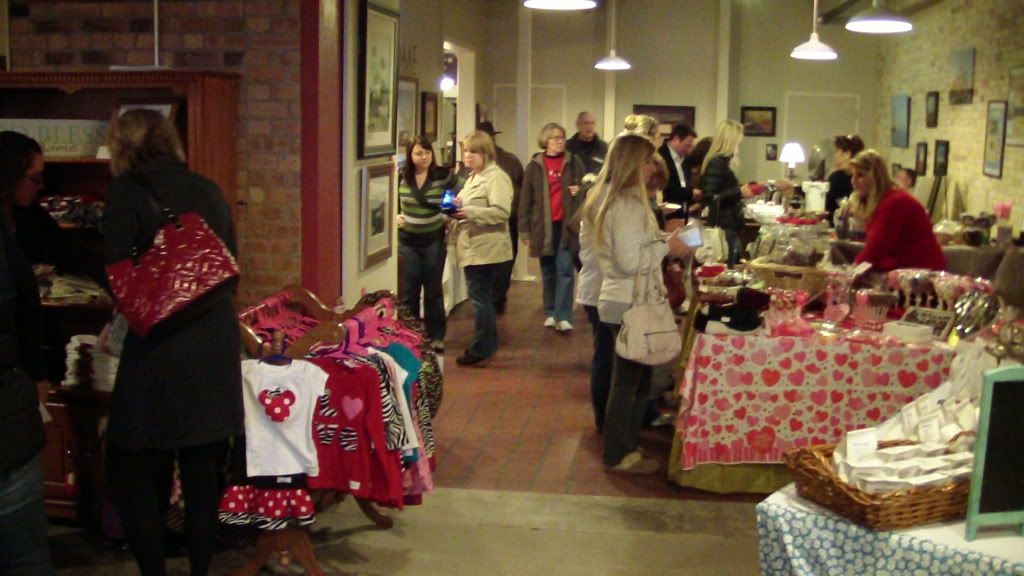
The West Michigan Jobs Group, our group, lead by our fearless Vice Prez held our second Cash Mob to bring people into the area and find out what's going on in the current incarnation of the Century Club. A cash mob is basically an organized group of folks who descend on a store or area of town to support local, independent biz.

Around 60 folks came to this one:


It's hard to really appreciate the need for cash mobs to introduce people to under-represented regions of the city if one doesn't realize that most of the downtown had been bulldozed in one in an endless stream of frustration with our past going on a century and more.

Tuesday, January 31, 2012

Here's Some More of that Creative Destruction Mitt Romney Talks So Much About

Here's another story that underscores the fight for survival industrial towns have been in for decades. The city of Pontiac, Michigan has put just about everything in town up for sale, from the cemetery to the town hall to the library building.

The most poignant part of the story for me is when the reporter asked retired auto worker Charles Mason, "What's happened to your city?"

Mason's reply "It's gone...my city's gone."

Incidentally, this is what folks like Mitt Romney refer to as "creative destruction" as a vague dismissal of the human collateral damage from bad economic policy. These huge industrial ghost towns didn't have to happen. The experiment to shift America to a service based economy has been a drawn out failure for most of our country.

Monday, January 23, 2012

The Fate of the Badger isn't a Story of Government Intrusion. It's a Story of Greed.

The SS Badger. Have I ever talked about the SS Badger?


It's a car ferry that travels between Ludington, Michigan and Manitowoc, Wisconsin. It takes about four hours to get across the lake. After operating since 1953, the SS Badger is likely to be shut down from an EPA rule, and it's entirely the owners' fault. As the last remaining coal powered passenger vessel in the United States it dumps about 4 tons of mercury and arsenic laden coal ash into Lake Michigan every single day it operates. Every. Single. Day. Shutting it down will kill a West Michigan landmark, and hurt the economy of the small town of Ludington. Blame falls on the owners of the Badger.

I would disagree with those who would shut down the Badger with relish and gusto. More appropriately, if it must go out, it should go out like an old, beloved family pet. Yes, it's a polluting old vessel. But it's OUR polluting old vessel. And it holds beautiful, cherished, and warm memories for many of us.

I rode on it once when I was very very small. So long ago that I only have sense memories of it. The wind on my face. The smell of the lake. And blue, and blue, and blue. Getting drowsy and sleeping against my father. The memories are, though I barely remember them, fond ones. I have a certain pain in my heart to hear that it's likely to shut down. And I have an even greater pain in my heart for the city of Ludington which sees quite a bit of economic activity from the Badger. Up to 200 jobs created from the ferry in a small coastal michigan town on the edge of Up North.

It's going to hurt Ludington when the Badger goes.

Those who would blame the EPA are misplacing their anger. State reps are trying to get exceptions from the EPA to allow the Badger to continue dumping on the grounds that it's historic. On the grounds that it's the LAST remaining coal fired passenger vessel, while the EPA is shutting it down for exactly the same reason.

Ultimately, however, the blame lays in the hands of the owners. The writing has been on the wall for more than a decade that coal as a source of power for ships was on the outs. You don't get to be the last remaining coal fired passenger vessel in the United States without ignoring the warning signs, and going for cheap cheap cheap at the expense of our waters.

In 2008 the Environmental Protection Agency demanded that the SS Badger find a way to capture and properly dispose of the coal ash rather than directly dumping it into the lake. It gave them years to do this.

Did the owners of the Badger do it?

Given years to do so, did they do it?

Given years to change to a new fuel source or simply reclaim the coal ash rather than dump it into the Big Lake did they do it?

No.

The owners have had years of notice. Half a decade. Years and years to stop dumping their coal ash into the lake. But they ignored it.

This isn't a story of government intervention. This is a story of greed. This is a story of a company that wanted to run this landmark ship as long as possible as cheaply as possible with no regard for its long term survival or the health of our Great Lakes. While all other passenger ship businesses moved on......the owners of the Badger tried to wring out every last cent from the ship before it died, everyone else be damned.

Monday, January 16, 2012

Muskegon Documentary "Up From the Bottoms: Search for the AmericanDream" to Premier on PBS Nationwide

The Internationally acclaimed, and award winning film "Up From the Bottoms: Search for the American Dream", produced and directed by Jim and Rod Schaub of my home town, Muskegon Michigan will premiere on PBS nationwide in February.

"Up From the Bottoms" chronicles the movement of African Americans from the South to West Michigan around the turn of the century.


February 5th, PBS - 8:00 PM....watch it.

Thursday, January 5, 2012

Parbolic Michigan Dunes In the Winter

Photobucket

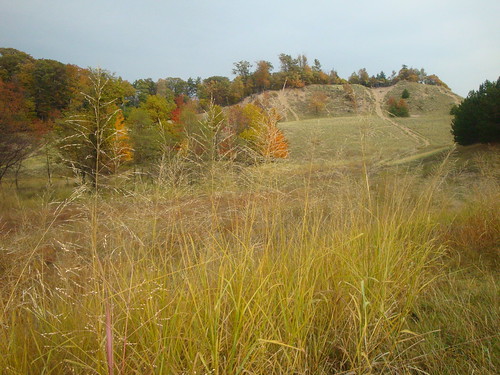
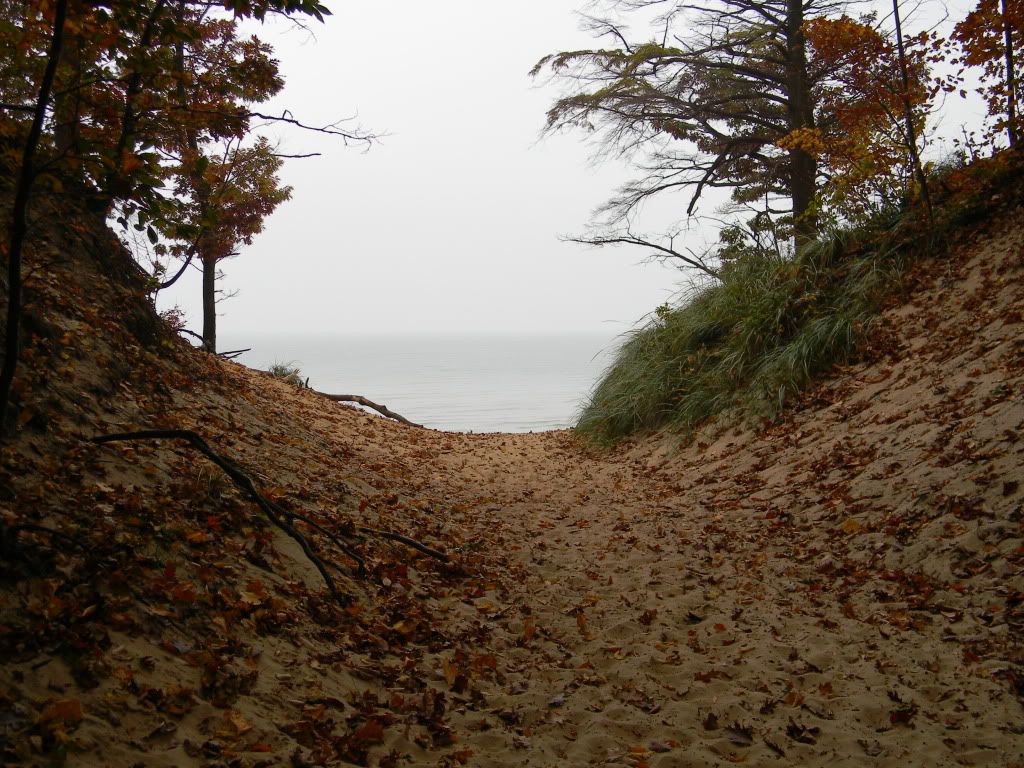
It's not just the Great Lakes themselves. It's not just the water, and the massive holes in the ground that cradle it. It's the world around the edges that the waters make possible. The susgar sands of Lake Michigan, the agate beaches of Lake Superior, the Niagara Falls between Erie and Ontario.

It's the edges. Where the oak and hemlocks decide, almost unanimously that they should stop and let the dune grass have a place of its own with the trees fomring a line along the dune ridge looking down, but rarely passing.

Photobucket

Photobucket

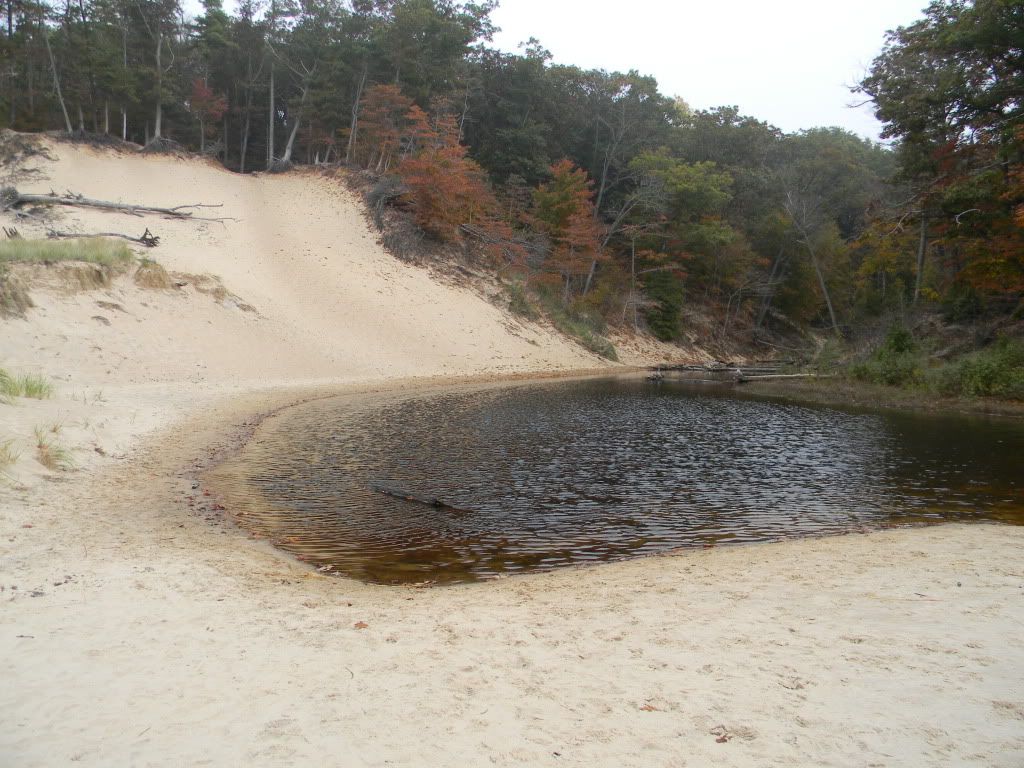
Someplace between the waterline and the tree-covered hills in the interdune habitats built up over the millenia, is an ecosystem of its own. It inhabits a thin band just 100 feet wide in many places, but streches up the shoreline of Lake Michigan for hundreds of miles. Parabolic dunes, or "blowouts"expand the sandy ecosystem into the woods, here and there...where natural or man-mad erosion caused the underlying sand of a large dune to be exposed and the wind continuously removes the ground cover, back and back and back.

Photobucket

The dune grass plays an important role in stabilizing the dunes. Keeping them put. Allowing the establishment of nutrients and soil and keeping the water down...Preparing them once again for the trees to move in as far as they'll dare.

Photobucket

Photobucket

Photobucket

Monday, December 19, 2011

Come January Michigan Will Slash Unemployment Benefits by 30%

The grand re-experiment to see if society can be improved by kicking the shit out of the unemployed continues in the Great State of Michigan. And believe me, we know unemployment. We're experts. EXPERTS in unemployment. As The Onion once said back in 2007:

"LANSING, MI—In another devastating blow to the state's already fragile economy, the Unemployment Insurance Agency of the state of Michigan permanently shuttered its nine branch offices Monday, leaving more than 8,500 unemployment employees unemployed."

[snip]

"People from all over the state used to come just to visit our unemployment office," Ayers, 52, said. "Just like Detroit, Ypsilanti, Novi, and most other Michigan cities, Flint's an unemployment town. Has been as long as I can remember."

This State, being no stranger to unemployment, seems to have voted itself into office a bunch of folks who think the remedy to chronically high unemployment is to slash the time allotment for unemployment benefits by 30%, from 26 weeks to 20 weeks.

Starting this January, the new rules go into effect and folks freshly dropped from their livelihoods only get 5 months to look for more work. But not just that. Heck no....

The measures require some unemployed workers to take new jobs after 10 weeks of benefits even if the available work is outside their previous experience or pays lower wages than they were making before. They also make it harder for someone to collect jobless benefits if they're fired for cause or leave a job voluntarily.

The goal here is to either:

1. Punish the unemployed as motivation to be Not Unemployed.

or

2. Chase the unemployed the hell out of Michigan.

or

3. To screw workers in order to cut unemployment insurance costs for Michigan businesses and repay the Federal government the unemployment money lent to it because MICHIGAN HAS BEEN SCREWED for so long, exhausting the unemployment insurance coffers...

...as in NOW is the worst possible time to kick the unmployed to the curb.

The new laws also allow the state to sell bonds through which Michigan employers can repay the $3 billion owed the federal government for loans made to cover unemployment benefits from 2007 until now. The proceeds from the bonds will be used to pay off the debt, eliminating hefty penalties and interest employers now are paying the federal government.

Employers will repay the bonds and the state will get back $38 million borrowed from the general fund to cover the payments.

The Michigan Chamber of Commerce said the bonds will save employers penalties and interest, even though some will see their payments go up to repay their share of the bonds. Wendy Block of the chamber said the overall legislation will reform the insolvent unemployment insurance system to address many of the problems that created the funding crisis.

Classic.

Monday, November 28, 2011

In January Michigan Will Start Taxing Me On Insurance Premiums to Save Blue Cross Some Money

And yet another tax on the middle class.

We recently got a letter from Blue Cross Blue Shield of Michigan about the Michigan Health Insurance Claims Assessment Act that will go into effect one month from now on January 1, 2012.

Snyder, a Republican, worked with state lawmakers on the measures and agreed to them as part of the effort to balance the state’s budget overall. In addition to the new tax, the state ended a 6% use tax on Medicaid managed care organizations. The blanket 1% tax on all payments is expected to cover some of the losses from eliminating the use tax.

So a 6% Use Tax on Medicaid Managed Care organizations was scrapped and replaced with a tax on insurance claims and premiums "The new rules will impose a 1% tax on all health care claims paid in the state and use that money to provide health care for low-income residents."

As I understand it, many of the managed care organizations are subsidiaries of insurance companies -- so Michigan effectively removed a tax on insurance companies who get money from Medicaid, and replaced it with a tax on insurance claims and premiums for self insured folks like myself.

I have no problem paying a little more if I know it's going to help folks less fortunate. What gets me is when my taxes are raised so that massive companies awash in cash can have a tax cut.

Michigan's legislature and governor simply shifted the tax burden from large corporations to the average Joe in order to maintain the same level of Medicaid funding we had before.

Our lawmakers were hell bent on removing the 6% use tax primarily on insurance companies and in order to keep Michigan eligible for 780 million dollars in Federal funding for Medicaid, they shifted that cost to everybody else.

Monday, November 14, 2011

This is what art is for, isn't it?

Through some sequence of interactions I can't quite figure out, I found myself on a newly formed Muskegon Area Arts Council. Tonight it had its third meeting at the Tipsy Toad Tavern in the downtown that had largely been reduced to a sand pit 8 years ago or so when entire city blocks were torn down...

...long story. I'll sum up:

Blah blah blah...1970's high unemployment, failing factories...blah blah blah....city revitalization project...blah blah blah..."hey, let's reinvent ourselves into a retail center." blah blah blah...

Anyway, they ended up bulldozing 4 to 6 blocks of the downtown in 2004, which was about 30% of the entire downtown. On the bright side, they're rebuilding. There's a nice culinary arts school where a parking lot used to be.

Where was I? Ah yes, the Tipsy Toad Tavern.

I got there early so walked the mostly empty streets of downtown Muskegon to kill some time. Walked passed closed buildings between alternately bright spots lit by the street lights and dark spots, filled with shadows and alleys.

Folks walking in my direction invariably crossed the street before getting anywhere near me. Or maybe I was just imagining that. Either way, it was quiet and empty in the partially bulldozed downtown until I reached the local theater building where the Muskegon Civic Theater performs most of its plays. Up on the third floor in front a huge, brightly lit window were twirling heads...people dancing...people rehearsing. Somebody was singing, somebody else playing a piano, all just loud enough that the sound carried outside the window and radiated into the streets.

I stopped and watched the only sign of life around me.

I watched until I got the idea that I could just walk right in. So I did.

Nobody stopped me. I poked my head into the dark, empty theater itself, and wandered through halls toward the bigger theater, the Frauenthal center, but didn't dare go into the stage area. Not because it was dark, but because it was clearly full of life. Behind closed fire doors, on the other side of the silent hall I'd been walking I could hear something being constructed. A set, most likely. The sound of a radio, and people talking away...power tools...hammers...

I kept walking. Went up a flight of stairs where the sounds of the dancers and musicians grew louder. There on the second floor, a gallery. An art gallery. Again, I was alone but for the sound of people in another room above me.

I'd just walked into this world and didn't encounter another soul face to face. Just sounds. Creaking floorboards from dancers above me. All around me photographs, some of beaches from around the world, some of stars and galaxies taken by an eccentric man who long ago built an observatory into the roof of his small cape cod.

This is what the arts are, isn't it? Looking into another world. Reaching beyond the self. A creative act that brightens a lonely evening.

I walked the long plush carpet in the foyer, and walked down some dark steps to a trickling fountain in a darkened restaurant down below the main level...all the while in the background the distant sound of piano and singing, the hammer and banter of sets under construction.

Enough time had been killed, so I wandered out the door back into the chilled night and walked back up the street to the Tipsy Toad Tavern to meet people who chose to gather to breathe more joy and life into the city we love. To cultivate creation.

Friday, October 28, 2011

Politically and Morally Incapable of Maintaining our Civilization

Michigan urgently needs infrastructure investment. At least a billion dollars worth. That's where Governor Snyder and I agree. And if we don't do it now, it's going to cost us WAY more than that to play catch-up.

And now comes the task of paying for it. Snyder's idea is to dramatically increase vehicle registration fees by $120 per year.

$120 more per year to drive my car. That's a spicy meatball.

But hell...

As annoyed as I am that they'd give 1.6 billion in tax cuts to midsized and large businesses in Michigan at a time when Michigan is in desperate need for infrastructure investment, I would cheer our leaders for doing the responsible thing. I may be annoyed that the dude driving the Hummer and the dude driving the 1994 Honda Civic beater are paying the same vehicle registration fee....but whatever. We need these roads. I'd cheer our reps for actually RAISING the revenue needed to do the right thing and maintain our foundational infrastructure.

But I strongly suspect they won't. They're already fleeing from the notion of raising revenue. I've come to believe Michigan's congressional Republicans are politically and morally incapable of doing what needs to be done to maintain even the most basic foundations of our civilization: our roads. Our bridges...

Even the matter of bridges, the matter of building stronger more expedient trade routes with our largest international trade partner, is a contested one. The Maroun family owns the one bridge between Detroit and Canada and they're not giving up their effective monopoly without a fight. They've got most Michigan congressional republicans in their pockets....forget about the 10,000 jobs constructing a second bridge would create, forget about a new bridge connecting to an actual highway, forget about the fact that CANADA is going to pay for it, forget that business leaders, our governor, most citizens, pundits, editorial boards, cities, and three year olds and their stuffed walruses are in favor of the bridge...

Michigan congressmen like Senator Goeff Hansen are bought and in the pocket of the family who owns the Ambassador Bridge. They will sell out Michigan's future and nearly 10 million people just to keep a relationship with a rich family that doesn't even live here.

Michigan's Republican congress simply doesn't have the political or moral capacity to carry our state forward...to maintain even the basics of civilization.

Monday, October 24, 2011

Running the Dunes 'Til Our Legs Can't Keep Up

DSC01521

I watched my three year old run up the dunes this afternoon. We walked down to Lake Harbor Park, mid-day. My boy leaped from wooden retaining walls, ran up and down embankments, climbed on benches. A group of people, some elderly, some in wheel chairs, some with oxygen tanks, sat around a picnic table near a pavilion where brown leaves fell onto the wet green turf. Up and down wooden steps my tiny little boy ran and ran. He ran past the group of people. Ran down a leaf strewn trail under a falling canopy. Ran up and down a small dune toward the parking lot area and hid behind trees. Ran past young men walking into the woods with their friends to that place, the place where sweet, resinous smells mix with the autumn leaves, the place where young people go, where they've always gone. My boy ran up that hill to the place where the young people have always gone, past a group of young people sitting in a group, smiling or looking away, with their hands behind their backs...

"Excuse us...just passing through" is what I always tell them when one of my boys chooses this dune to climb, and this branch of woods to explore.

We ran past them. Through the hemlocks and the small, scraggly oaks clinging to a sandy shifting edge. And then down. And then across the dry dune grass, and then I sat and watched as my three year old boy ran up a large dune face. A trail where people have climbed for decades. A trail where people sled down.

Up, up, up he ran and I stayed at the bottom and watched the tiny little boy grow tinier, and tinier, and tinier as he climbed and turned and waved and climbed and climbed some more until he was a teeny tiny, tiny boy far up the dune.

And when I expected him to run down that steep, sandy dune, with gravity carrying him faster and faster until his little legs couldn't keep up and he did a face plant...he chose to stay up the hill instead and disappear into the woods at the top.

I yelled to him and he peeked around the corner of a dried wooden stump and then he disappeared again, and so I ran up the hill...

I ran and ran, up, up, up, the hundred foot dune after that tiny boy.

I used to run up the very same dune as a teenager. As a very young man I ran up this exact same dune. I walked over three miles to this park from my home then. And I'd get to the bottom of this dune and I'd run up it as fast as I could, and when I reached the top, I would vomit from exhaustion, and lay unable to move. Running up a sand dune isn't like running up a hill. The feet sink into the sand, and you slide back, and you lift your legs high and plant your next step and slide and on and on, gaining just inches with each step.

I ran up the hill after my tiny boy today, much older and heavier and sedentary than I was in high school, tasting iron from lungs with each breath, with aching then quivering calves, up, up, up and collapsing at the top where my boy was watching me from a gray, dried branch.

"Oh...." I panted to him... "hi...there you are........... you need to come down....when I call you..........." my lungs ached "......your squirt gun is.......over there by the grass....." I pointed over a little down the hill to his purple squirt gun, my legs were like rubber. He leaped down the dune from his perch on the branch and grabbed his squirt gun and ran back up to me. The leaping into the soft sand from such a height was apparently fun enough that he did it five or six more times while I felt the heat radiate from my own chest.

When I was finally able to breathe normally again, we ran down the hill, faster and faster until gravity overtook us, and our legs were moving faster than we could keep up with and we fell into the soft sand at the bottom. Then we walked home.

Thursday, October 13, 2011

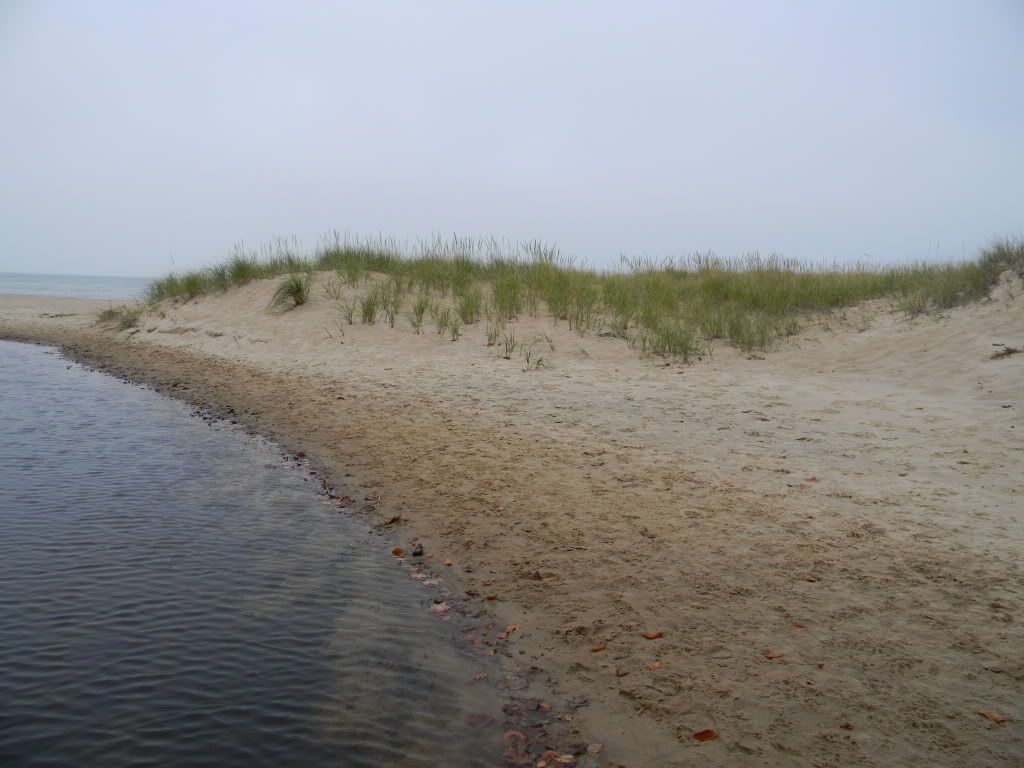
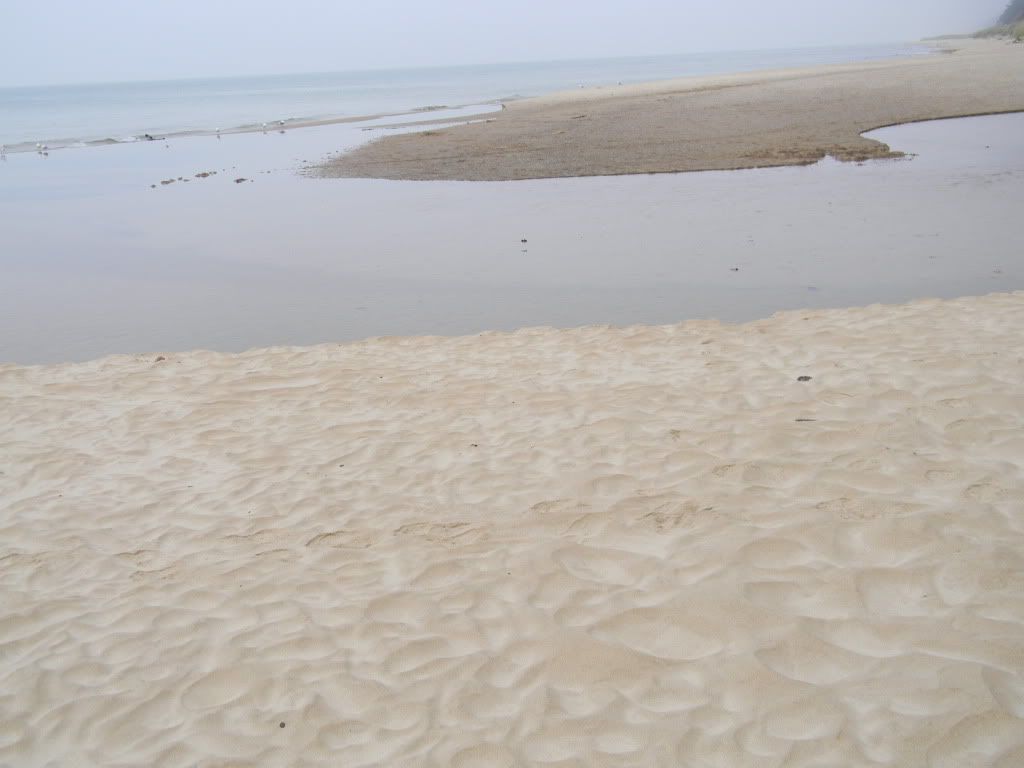
Where Little Black Creek Empties Into the Big Lake - Photo Diary

I went through the campground at Hoffmaster State Park, on my way down to the lake.


I expected the campground to be mostly empty, but there was well over half occupancy. Tents. Campers. Most of them were decorated with skeletons, pumpkins, ropes strung between trees like massive spiderwebs, flags and banners with zombies and witches, all behind the morning autumn mist.


Morning campfires filled the woods with the scent of burning pine and the distinctive musty smell of black walnut.

Children, at 9:30 AM in early autumn, rolled along on skateboards and scooters.


The campground itself covered the Hoffmaster State Park sign with a green skeleton, and put up banners for the campers telling them of a childrens' harvest festival.


On the way to the water's edge, golden maple and beech leaves rained in slow motion through the woods, along the pathway and through the trees, up the steep dunes.


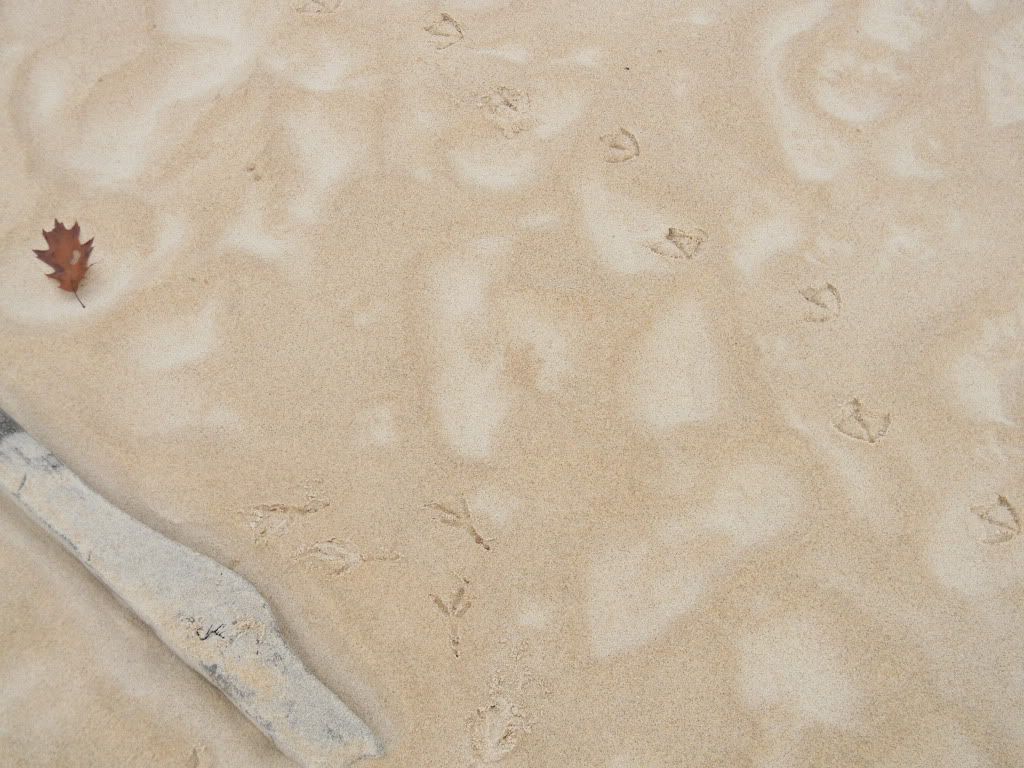
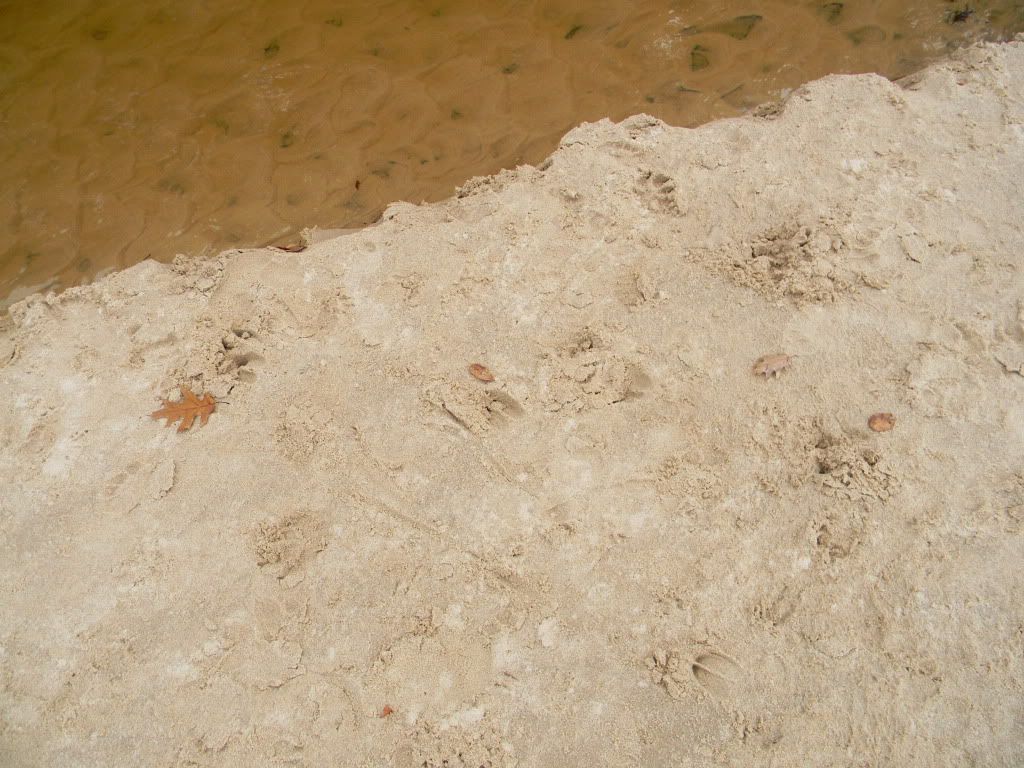
The beach sand held a natural windswept cascading pattern, distinct from the summer pitted pattern from swimmers and sun bather walking along the beach. But humans, being a compuslively symbolic species still scrawled messages where the sand was wet and packed. Children's names. Brief messages of adoration. Designs made with sticks.


Other animals left their own patterns. Brief records of their existence along the shifting sands.


Wednesday, October 12, 2011

Community Along the Roadside

An old man sold used bikes off Pontaluna road. Hidden behind a mesh of Norwegian spruce, behind thin maples and a rotting wood fence, an small white clapboard sided home down a gravel driveway. Along the road a row of bikes and a hand painted sign "Bikes For Sale". Ten speeds, mountain bikes, childrens bikes, dirt bikes. Every day. All day.

Drive down the dirt road past rows and rows of bikes in ascending size, a repetition of shape with varience of size and color. A pile of rusted bike parts and wheels blend with the woods behind the garage, and a massive oak is draped with hundred, maybe thousands of drooping bicycle innertubes.

Approaching the home, out of the car, turn to the home and knock on the door and wait. Knock again and wait.

Nothing.

And then a voice. An old man sitting, almost molded into in a frayed easy chair in his garage.

"You want a bike?"

He shuffled down the gravel driveway over to the bikes, guided us through the rows of childrens' bikes, and helped us pick out and size a bike four our 4 year old. Then he shuffled back to his green, threadbare easy chair. He asked for $8.

Today I drove along Apple avenue and passed a roadside vegetable stand overflowing with squash, cabbages, bushels of tomatoes outside a small white clapboard sided home down a gravel driveway. I turned around and pulled up, ready to put my dollar or two into a can to buy a butternut squash.

A tiny old woman in a red threadbare easy chair surprised me as I walked up, asking me "You want squash?" I couldn't quite make out her accent.

"Yeah!" I said "I'm looking for butternut squash"

"They a dollar fifty each" she said "How much you have?"

I reached into my pocket and pulled out three dollars, and said "I have three dollars"

"I sell them for a dollar each." She said. I looked down at the squash with tape on it reading "$1.50"

"Sounds good to me."

We talked for a bit about butternut squash recipes, then she saw me eyeing up a peck of potatoes "Those a dollar also." She reached over and pulled on out and cut into it, reveaing a creamy yellow interior "See? Very good potatoes"

We talked about her land. Her farm. The growing season. She bagged up my $2 worth of produce and with wrinkled hands smelling strongly of tobacco she handed me two tomatoes. "Here." She said "I have too many tomatoes."

We talked a bit more. She lives alone with her dogs. She buys whole cows and freezes the meat, and feeds her dogs T bone steak...they eat what she eats.

Tonight, I'm making potato and butternut squash soup.

Monday, October 10, 2011

Michigan Legislators Strip Food Assistance from a 13 Year Old Girl

Some acquaintances of mine have recently started taking care of a 13 year old girl.

Great kid. Wonderful with my kids and their kids. She was abandoned over the past two years. Neither of her parents, who were split up, wanted her. The grandmother also avoids having anything to do with her. I'm not sure whatever happened to the parents. But I know that the girl fell into the foster home system.

She had food assistance, to help her out and the family that was taking care of her.

Had.

HAD food assistance.

A new law, passed by the Republican congress and signed by the Republican governor, stripped the 13 year old girl of food assistance. The law takes into account more assets when determining eligibility.

And guess what? The 13 year old girl has a modest trust fund which she can't touch until she's 18. So her food assistance was stripped.

Michigan has determined food assistance eligibility based only on income for roughly a decade. A new policy will include a review of certain financial assets starting Oct 1. The requirements will affect new applicants right away and existing recipients when their cases come up for review, which typically happens once every six months.

Those with assets of more than $5,000 in bank accounts or some types of property would no longer be eligible for food assistance. Other assets that would count against the cap include vehicles with market values of more than $15,000 and second homes, depending on how much is owed on the properties.

Sunday, October 9, 2011

Slip obscured into the autumn fog and silence

It's the season of mushrooms. The fragrance of cedar and the air of moss and rain, without cedar. Ghosts of fallen trees, red cubes and red dust framed in green. The season to observe distant strangers in the woods crouched among the stumps and tree bases. In the dune valleys. Knowledge of the woods explored to children who run ahead and drift behind. Spelunk under leaves and mist off the trail to strange domes of red and orange, to cities in miniature where red-backed salamanders make a home beneath bruised wet caps.

The woods are filled with swords. With hushed waves and ravens calls.

Each path leads to dragons, and tree-duels and sparring along the way to low and interesting spaces. Spaces between. Spaces below. Around. Where earth walls contemplate dungeons and rolling without complaint. Where mossbeds like green carpet are places to lay and talk and munch on wintergreen earthen candy between tree adventures, and insects are metallic and kingly.

Like blood. Like rust. Earthy red mushrooms dot the low, sandy patches that get into the clothing among the scrub oak and juniper and crusty, starshaped puffballs. It all ends up swept when the shoes come off. A spray of grit spilled along the floorgrain, the dunes have their ways of moving in by wind and by shoe and by emptied pockets, there's no stopping them in their centuries long agenda of shifting. Only the hardened dunegrasses can tame them, but they bloom in the fall in tassels while the fibers wash along the shore.

The trees know when to stop.

Their gnarled rootfeet terminate at the ridge in pause and never dare to move into the sharp dunegrass and eroding, sanding winds. They stand and watch and listen to the edge of the wind, knowing where the world ends. Soon they fade from green, to yellow, to red and slip obscured into an autumn fog and silence.

Thursday, October 6, 2011

THIS is what happens when community rallies to do big things.

It's a huge deal!

It's a huge deal for renewable energy and wind power. It's a HUGE deal for the study and health of birds and bats over the Great Lakes. Its a HHHUGE deal for Great Lakes researchers and the ecological health of the Great Lakes.


And it's a huge deal for West Michigan and Muskegon and Grand Valley State Universtiy.

HUGE!

THIS is what happens when a region and a community rallies to do and reach for BIGGER things.

Photobucket

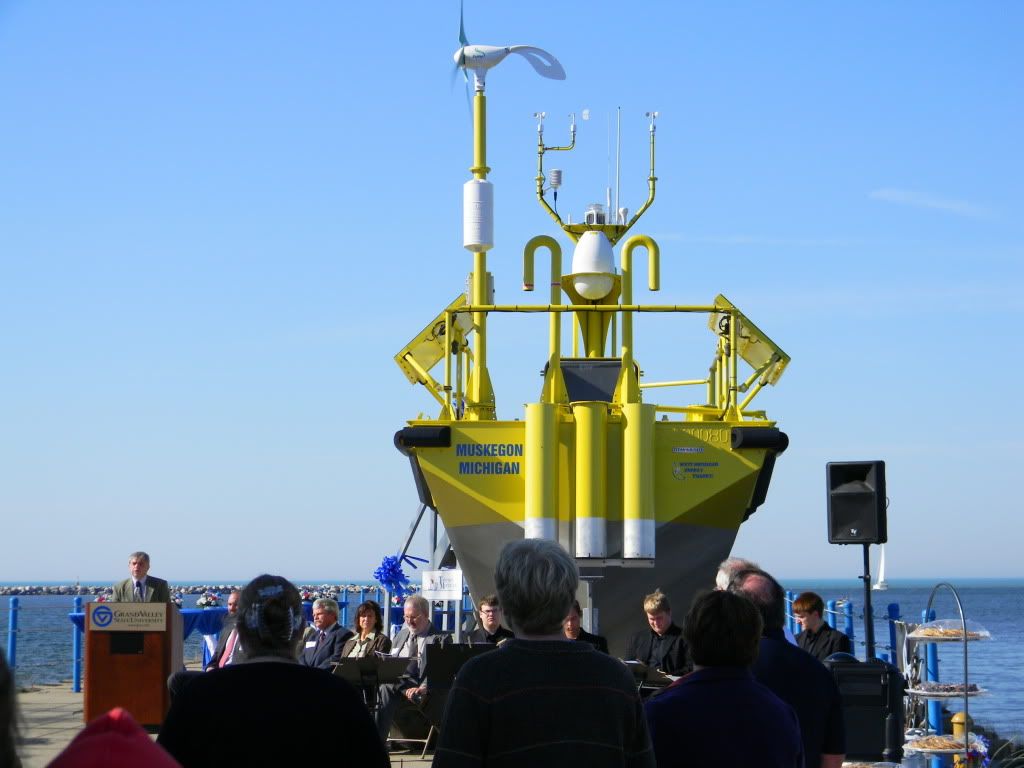
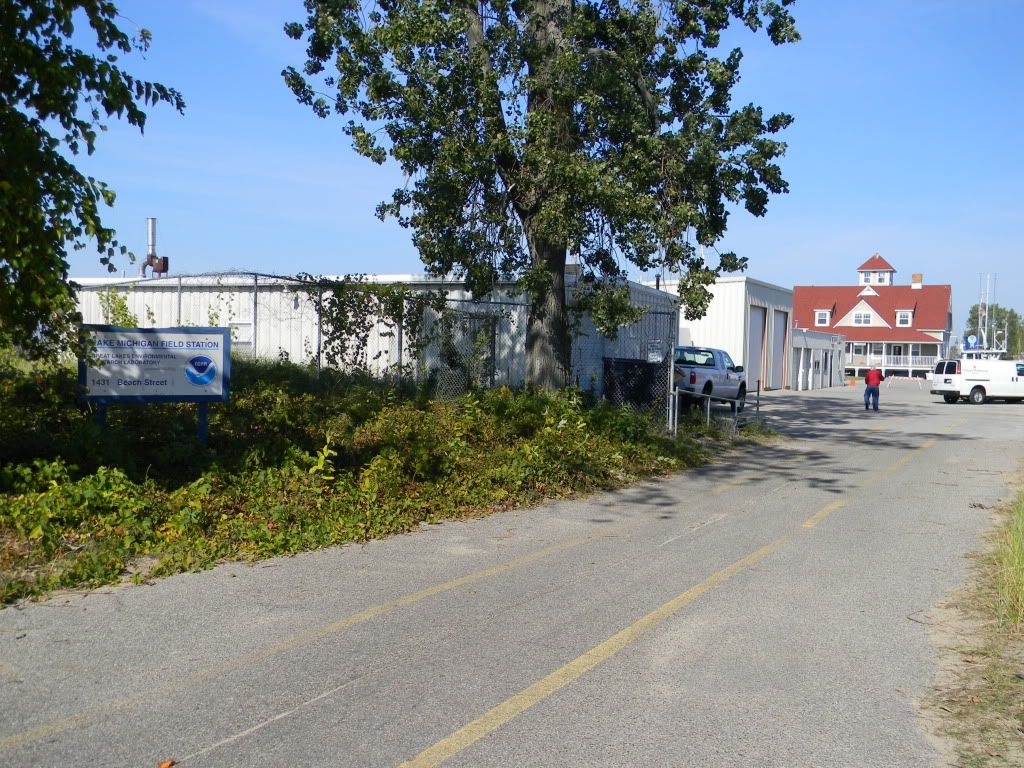
Today in Muskegon, Michigan, researches held a dedication ceremony for the FIRST EVER advanced research buoy in North America to be put into the water at all, ever, and it was launched right here at the Muskegon based, NOAA Great Lakes Environmental Research Laboratory.


This thing is going to monitor weather patters, wind speeds, bird migration, water temperatures and currents, water chemistry. This thing is the most advanced floating laboratory ever put in the water in the United States and it's going into my beloved lake.

Sure, sure...there are currently three advanced offshore wind research buoys. But two of them are currently languishing on the shore, waiting for the funding and go-ahead to actually be launched.

The launch of the buoy in the Great Lakes is the first introduction of this technology anywhere in North America, said Arn Boezaart, director of the Michigan Alternative and Renewable Energy Center. “The research buoy represents an amazing new capacity for wind research in the Great Lakes," he said. "It includes the most advanced wind measurement technology available."

Following a week of tests on Muskegon Lake, the buoy will move four miles offshore on Lake Michigan for a month-long trial.

Real-time data will be transmitted from the platform to researchers at Grand Valley, U-M and the Michigan Natural Features Inventory of Michigan State University. The research will provide information to support possible future development of offshore wind energy technology in the Great Lakes. MNFI research will focus on bird and bat flight patterns and migration studies.

The primary objective of the Lake Michigan offshore wind assessment is to gain a better understanding of the potential of offshore wind energy, as well as other physical, biological and environmental conditions on the Great Lakes. The research will provide information for the future development of offshore wind energy technology. In June 2010, the project secured $3.3 million in grants and research funds, including a $1.33 million energy efficiency grant from the Michigan Public Service Commission.


The world is inexorably moving in the direction of renewable energy.

It cannot be stopped.

We still do big things in America. We still reach for a better world. And there are still parts of America where people rally together to move forward. This buoy is a huge joint effort from many groups and people from all political ideologies, industries, non profit organizations, and scientific disciplines.

We WANT to be people of vision.

We WANT to dream big dreams.

We WANT to lead the way in renewable energy and a future sector of green manufacturing, offshore wind power.

And we're doing it right here in Muskegon, Michigan.